
Sbarro
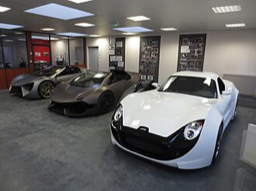
Sbarro is a Swiss specialist manufacturer and design house known for highly limited-production replica sports cars, concept vehicles, and custom high-performance automobiles.
Last updated August 31, 2026
AI crawler reads
2requests
1companies- Anthropic2
- Profile
- 2
- Controversies
- 0
- JSON · MD
- 0
- First read
- Nov 4, 2026
- Latest read
- Nov 4, 2026
From this site's server log
Overview
Sbarro is a Swiss automotive design and construction company founded by Franco Sbarro in 1971. It operates in a niche between coachbuilding, replica-car production, experimental vehicle design, and automotive education. Unlike mass-market manufacturers, Sbarro has generally developed one-off cars or very small production runs for collectors, private customers, motor-show audiences, and design students. Its work is characterized by dramatic styling, unusual mechanical layouts, high-performance engines, and a willingness to disregard the packaging and manufacturing constraints that shape ordinary production cars. The company’s earliest known automobile was a replica of the Lola T70, powered by a 5.4-litre Chevrolet V8. Sbarro subsequently produced replicas inspired by historically significant vehicles including the BMW 328, Ford GT40, Bugatti Royale, and Mercedes-Benz 540K. The BMW 328 Replica became the company’s most numerous model, with approximately 135 examples reportedly built, while most other projects were produced in single-digit quantities or as individual commissions. This limited-volume approach made Sbarro more comparable to a specialist coachbuilder than to a conventional car company. During the 1970s and 1980s, Sbarro expanded from replicas into original designs and technically adventurous project cars. The mid-engined Tiger used a large Mercedes-Benz V8, while the Stash was offered in coupé and convertible forms. A turbocharged version of the Stash was developed in cooperation with fashion designer Pierre Cardin and combined a Volkswagen-based powertrain with an especially theatrical interior featuring distinctive upholstery and zip-fastened storage details. The Challenge series pushed the company’s experimental identity further. The Challenge I, shown at the 1985 Geneva Motor Show, used a tubular frame, a turbocharged Mercedes-Benz V8, twin rear wheels, a large adjustable rear wing, and a reversing camera intended to improve aerodynamic packaging and rear visibility. Later Challenge variants were planned around Porsche 930 components, with production envisioned at only ten cars. Sbarro also created technically unconventional project vehicles such as the Super Twelve, whose twelve-cylinder engine was assembled from two Kawasaki Z1300 motorcycle engines, and the Super Eight, which used a Ferrari 308-derived V8. These cars demonstrated the company’s recurring interest in compact, high-output powertrains and visually exaggerated bodywork. In later years, Sbarro continued producing concept and custom vehicles, including the GT1, GT12, Millennium Coupé, Christelle, and Picasso. Hubless wheels appeared repeatedly in its experimental designs and became one of the recognizable motifs of its concept-car work. The company’s activities also include the Espera school, established by Franco Sbarro to provide instruction in automotive design and mechanics. The program combines classroom learning with practical vehicle development, linking Sbarro’s show-car production with hands-on education. In 2011, a student team associated with the school presented the Evoluzione concept at the Geneva Motor Show. Designed by 25 students over 13 weeks, the car used a turbocharged Audi 1.8-litre four-cylinder engine and deliberately exposed much of its rear suspension and engine installation. Sbarro’s exact present corporate structure, active model range, ownership, and production status are not established by the supplied sources.
History
Sbarro was established in Switzerland in 1971 by Franco Sbarro. From the beginning, the company followed a specialist and experimental model rather than attempting volume automobile production. Its initial offering was a replica of the Lola T70, fitted with a Chevrolet V8. This set the pattern for much of the company’s early business: recreating famous sports and luxury cars in extremely small numbers while adapting their engineering to available components and customer requirements. The company later built replicas based on the BMW 328, Ford GT40, Bugatti Royale, and Mercedes-Benz 540K. The BMW 328 Replica was the notable exception to Sbarro’s usual one-off practice, with around 135 examples reportedly produced. Other replicas were built in much smaller quantities, commonly only a few cars. The resulting vehicles occupied a specialized collector market in which visual fidelity, rarity, craftsmanship, and individual customization were more important than manufacturing scale. Sbarro’s work broadened during the 1970s into original sports-car designs. The company developed the mid-engined Tiger with a 6.3-litre Mercedes-Benz M100 V8 and created the Stash as both a 2+2 coupé and a convertible. A special Stash project developed with Pierre Cardin combined a turbocharged 1.8-litre Volkswagen K70 engine with a highly stylized cabin. The interior, rather than only the mechanical specification, was central to the collaboration, using distinctive materials, striping, upholstery, and zip-fastened pockets. Despite the range of configurations discussed for the Stash, only a very small number appear to have been completed. In the early and mid-1980s, Sbarro produced some of its most technically audacious cars. The Super Twelve used a twelve-cylinder power unit assembled from two Kawasaki Z1300 motorcycle engines, mounted in a mid-engined layout and claimed to produce 260 PS. The later Super Eight retained related bodywork but substituted a Ferrari 308 V8. These projects reflected Sbarro’s preference for theatrical engineering solutions and bespoke construction over standardized production systems. The Challenge series was another important stage in the company’s development. Challenge I was shown at the 1985 Geneva Motor Show with a tubular chassis, a turbocharged Mercedes-Benz 5-litre V8, twin rear wheels, and a prominent biplane rear wing. The wing was designed to change angle under braking, adding aerodynamic stability. The car also dispensed with conventional exterior mirrors in favor of a reversing-camera concept, an unusual feature for its period. Challenge 2+2 and Challenge III followed as related proposals using Porsche 930 underpinnings, with a planned run of ten vehicles. A smaller Baby Challenge, powered by a 350 cc Honda single-cylinder engine, was also displayed for children. Beyond named production projects, Sbarro built numerous concepts and custom high-performance vehicles for private clients and public exhibitions. Later examples cited in reference material include the GT1 from 1999, GT12 from 2000, and the 2001 Millennium Coupé, Christelle, and Picasso. Hubless wheels appeared on several Sbarro concepts, reinforcing the company’s identity as an automotive laboratory as much as a car builder. Education became another part of the Sbarro operation through the Espera school, founded by Franco Sbarro more than two decades before the cited reference account. The school teaches automotive design and mechanics through a combination of theory and practical work. Its student-oriented approach was illustrated by the Evoluzione, unveiled at Geneva on 3 March 2011. Twenty-five students completed the concept in 13 weeks, using a turbocharged Audi 1.8-litre engine and an intentionally exposed rear mechanical layout. The available reference material does not establish Sbarro’s current ownership, management, production activity, or active commercial model range.
- 2011
Evoluzione is unveiled at Geneva
[1]A 25-student team completes the Evoluzione in 13 weeks and presents it with a turbocharged Audi engine and exposed rear mechanical components.
- 2001
Christelle, Millennium Coupé, and Picasso concepts are cited
[1]These vehicles are identified among Sbarro’s later concept-car projects.
- 2000
GT12 concept is developed
[1]Sbarro produces the GT12 as part of its continuing series of experimental and custom automobiles.
- 1999
GT1 concept is developed
[1]The GT1 is listed among Sbarro’s later concept and custom vehicles.
- 1986
Challenge 2+2 and Baby Challenge are presented
[1]Sbarro develops a Challenge 2+2 based on Porsche 930 components and shows a small Baby Challenge powered by a 350 cc Honda engine.
- 1985
Challenge I premieres at Geneva
[1]The Challenge I concept is presented with a tubular frame, turbocharged Mercedes-Benz V8, twin rear wheels, an aerodynamic rear wing, and a reversing-camera arrangement.
- 1984
Super Eight follows the Super Twelve
[1]The Super Eight adopts related bodywork but uses a Ferrari 308-derived eight-cylinder engine.
- 1982
Super Twelve project appears
[1]Sbarro develops the Super Twelve, using a twelve-cylinder engine assembled from two Kawasaki Z1300 motorcycle engines.
- 1975
Pierre Cardin Stash collaboration
[1]Sbarro collaborates with Pierre Cardin on a turbocharged mid-engined Stash featuring a fashion-led interior.
- 1971
Sbarro is founded in Switzerland
[1]Franco Sbarro establishes the specialist automotive company, beginning its work in replicas, custom vehicles, and experimental design.
Products and positioning
Ultra-low-volume Swiss coachbuilder and automotive design house focused on replicas, collector vehicles, experimental concepts, custom commissions, and practical automotive education.
Replica sports car · 1971
Lola T70 Replica
The first automobile associated with Sbarro was a replica of the Lola T70. It used a 5.4-litre Chevrolet V8 and established the company’s early focus on recreating notable performance cars in limited numbers rather than producing standardized mass-market vehicles.
Replica sports car
BMW 328 Replica
The BMW 328 Replica became Sbarro’s most numerous vehicle, with approximately 135 examples reportedly built. Its comparatively larger production run distinguished it from the company’s many one-off projects and made it an important part of Sbarro’s collector-car identity.
Custom sports car · 1975
Stash
The mid-engined Stash was offered as a 2+2 coupé or convertible. A Pierre Cardin collaboration added a turbocharged 1.8-litre Volkswagen K70 engine and a highly individual interior with special upholstery, striping, and zip-fastened pockets. Only a very small number are believed to have been completed.
High-performance sports car
Tiger
The Tiger was a mid-engined Sbarro performance project powered by a 6.3-litre Mercedes-Benz M100 V8. It exemplified the company’s preference for large engines, bespoke construction, and highly limited production.
Experimental sports car · 1985
Challenge
The Challenge series was an aerodynamic and mechanical experiment. Challenge I featured a tubular frame, turbocharged Mercedes-Benz V8, twin rear wheels, a biplane rear wing that could alter its angle under braking, and a reversing-camera concept in place of conventional mirrors. Later versions used Porsche 930 underpinnings and were intended for very small production.
Experimental sports car · 1982
Super Twelve
The Super Twelve used a mid-mounted twelve-cylinder engine created by joining two Kawasaki Z1300 six-cylinder motorcycle engines. Its squared-off body, broad fenders, and unusual central driveshaft layout reflected Sbarro’s interest in dramatic engineering and unconventional packaging.
Experimental sports car · 1984
Super Eight
The Super Eight retained much of the Super Twelve’s distinctive bodywork but used an eight-cylinder engine derived from the Ferrari 308. It represented a somewhat more conventional mechanical direction while preserving the visual character of the earlier project.
Concept car · 2011
Evoluzione
The Evoluzione was a Geneva Motor Show concept completed by 25 students in 13 weeks. It used a turbocharged 1.8-litre Audi four-cylinder engine and intentionally exposed the engine and rear suspension, treating the mechanical installation as a central design feature rather than hiding it behind conventional bodywork.
Automotive education
Espera school
The Espera school provides training in automotive design and mechanics through a combination of theory and practical work. Its projects connect student education with Sbarro’s broader tradition of constructing experimental and show-oriented vehicles.
Brand decisions
2011
Use student development to create the EvoluzioneProduct launchBackground
Through the Espera school, Sbarro combined automotive education with the construction of a complete concept vehicle.
Action taken
Twenty-five students developed the Evoluzione over 13 weeks and presented it at the Geneva Motor Show.
Aftermath
The project demonstrated the continuing relationship between Sbarro’s design activities and its educational program.
1985
Showcase experimental aerodynamics through the ChallengeProduct launchBackground
Sbarro used its Geneva Motor Show presence to demonstrate vehicle concepts unconstrained by ordinary production-car design conventions.
Action taken
The company presented Challenge I with a tubular chassis, twin rear wheels, a variable-angle rear wing, and a reversing-camera arrangement.
Aftermath
The Challenge reinforced Sbarro’s reputation for highly individual, technically adventurous show and collector cars.
1971
Enter the replica sports-car marketProduct launchBackground
Sbarro began operations in a niche market centered on historically recognizable sports cars and specialist construction rather than volume manufacturing.
Action taken
The company introduced a Lola T70 replica powered by a Chevrolet V8 and subsequently developed replicas of several other notable cars.
Aftermath
This established the limited-production, collector-oriented model that defined much of Sbarro’s subsequent work.
Recent events
Reported
Curefoods acquires South India Sbarro franchise rights[2]
Curefoods announced that it acquired the South India franchise rights for Sbarro, the US-based pizza chain. Curefoods plans to expand Sbarro in South India, including plans for around 50 outlets over three years.
Reported
Sbarro partners with Mike’s Hot Honey[3]
Sbarro partnered with Mike’s Hot Honey, with Mike’s Hot Honey dip cups becoming available for purchase at Sbarro locations across the United States starting October 14, 2021.
Sources3 sources
Cite this profile: Cite the canonical profile. /brand-wiki/sbarro · Editorial policy · How profiles are compiled