
Flying Pigeon
Product brand
UnclaimedA historic Chinese bicycle brand whose durable utility bicycles became a defining symbol of post-1949 urban life in China.
Last updated November 4, 2026
AI crawler reads
No AI crawler has read this profile yet.
Overview
Flying Pigeon, known in Chinese as Feige, is a Chinese bicycle brand and publicly owned bicycle manufacturer based in Tianjin. It is especially associated with the classic PA-02 roadster, a sturdy black single-speed bicycle that became one of the most recognizable consumer products in the People's Republic of China. The brand's history is tied to the development of Tianjin's bicycle industry and to the central role of bicycles in China's transportation system before mass private-car ownership. The factory's industrial predecessor was established in Tianjin in 1936 by a Japanese businessman under the name Changho Works. It initially produced bicycles sold under the Anchor name, later using the names Victory and Zhongzi. After the establishment of the People's Republic in 1949, the factory was selected for development as a major bicycle producer. The first bicycle carrying the Flying Pigeon name was completed on July 5, 1950. Worker Huo Baoji is credited with developing the design, drawing on the practical English Raleigh roadster format of the 1930s. The name and dove emblem conveyed peace and harmony during a period of regional conflict. During the 1950s through the 1970s, Flying Pigeon bicycles became closely connected with state-supported mobility and rising household living standards. A bicycle was considered one of China's Four Big Things, alongside a sewing machine, a wristwatch and a radio. The brand's bicycles were valued less for luxury or sporting performance than for their reliability, repairability and ability to carry people and goods over long distances. The classic models were simple all-steel, single-speed roadsters with large 28-inch wheels, full fenders, enclosed chains, rear racks, leather saddles and rod-operated brakes. Their sober appearance and standardized construction suited factory workers, civil servants, farmers and delivery organizations. By the reform era, the Flying Pigeon name had become so familiar that it was used as a shorthand for basic prosperity and household mobility. The company was reportedly China's largest bicycle manufacturer in the early 1980s and sold approximately three million bicycles in 1986. Demand for traditional models could exceed supply, with buyers sometimes facing long waiting periods. The bicycles were also adopted in distinctive colors by institutional users, including postal, fire-service and commercial organizations. The brand later faced declining domestic demand as motorcycles, electric bicycles and automobiles expanded. Its original central Tianjin factory closed in 1998, and production moved to an industrial area on the city's outskirts. The relocated operation used more automated manufacturing while retaining manual work in areas such as finishing and assembly. By the period described in the available reference material, the company produced approximately 40 models, including more contemporary city and mountain-style bicycles in addition to its traditional roadsters. Flying Pigeon's cultural importance exceeds its current commercial visibility. Many older examples continued to circulate in China through repair, resale and inheritance, helping preserve the brand's presence even as consumer preferences changed. The classic bicycles are also remembered as artifacts of the country's post-revolutionary industrial and social history. In 1994, the Chinese government designated Flying Pigeon a national key trademark brand under protection. The company has generally relied less on conventional promotion for its traditional models than newer consumer brands, because the name is deeply embedded in Chinese public memory, although localized advertising has been used for particular markets and products.
History
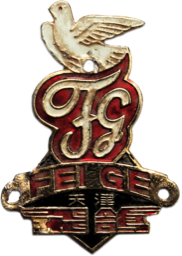
Flying Pigeon's industrial story begins in Tianjin in 1936, when a Japanese businessman established Changho Works and began making bicycles under the Anchor brand. The factory subsequently used the names Victory and Zhongzi. Following the political transition of 1949, the bicycle sector was reorganized and expanded as part of the effort to build domestic industry and provide affordable transportation. In April 1949, Communist Party secretary Liu Shaoqi visited the factory and instructed that it be developed as the first bicycle manufacturer of the new state. Workers were asked to create a bicycle that was durable, relatively light, attractive and suitable for broad public use. On July 5, 1950, the first Flying Pigeon bicycle was produced. Huo Baoji, a factory worker, is associated with the design of the early model, which drew on the established English roadster form, particularly the 1932 Raleigh design. The Flying Pigeon name and its dove emblem expressed peace and harmony. Earlier versions of the emblem showed a dove in flight; the recognizable later mark depicts a stylized dove resting above the initials FG. From the 1950s through the 1970s, bicycles became the principal form of personal transportation for much of the Chinese population. Flying Pigeon was one of the most visible brands in this development. Its bicycles were used by ordinary households as well as workplaces, government organizations and delivery services. The classic models emphasized robust steel construction and straightforward maintenance. Their equipment commonly included a single-speed drivetrain, 28-inch wheels, mudguards, a fully enclosed chaincase, a rear luggage rack, a sprung leather saddle and rod-actuated brakes. The PA-02 and PA-06 were men's models, while the PB-13 used a step-through frame associated with women's bicycles. The brand's popularity reached a high point in the early reform period. In the early 1980s Flying Pigeon was described as China's largest bicycle producer, and reported sales reached about three million bicycles in 1986. The traditional black models could be difficult to obtain, with waiting lists lasting years in some accounts. Their price represented a significant household purchase, while access could also depend on local allocation systems and personal connections. The bicycles became an emblem of modest but dependable prosperity, and the Flying Pigeon name was used in popular descriptions of a bicycle in every household. Economic liberalization and rising incomes gradually altered the market. Consumers gained access to more styles of bicycles, motorcycles, electric bicycles and cars. The central Tianjin factory closed in 1998 and production moved to an industrial zone outside the city. The newer facility introduced automated equipment and conveyor-based assembly while retaining hands-on finishing operations. The product range expanded to roughly 40 models, including modern city and mountain-style bicycles in several colors, although the traditional roadsters remained central to the brand's identity. Flying Pigeon has retained importance as both a manufacturer and a cultural symbol. Older bicycles have often been repaired, passed between family members or sold into secondary markets, extending their useful life and keeping the brand visible. In 1994, the government recognized Flying Pigeon as a national key trademark brand under protection. The company's heritage models are not dependent solely on active advertising: their design is immediately associated with the social history of the People's Republic, the era when bicycles formed the foundation of everyday mobility, and the ideal of a durable product available to ordinary citizens.
- 1998
Production relocates within Tianjin
[1]The original central Tianjin factory closed and operations moved to an industrial area on the city's outskirts.
- 1994
Recognized as a national key protected trademark
[1]The Chinese government designated Flying Pigeon a national key trademark brand under protection.
- 1986
Reported sales reach approximately three million bicycles
[1]The company was described as China's largest bicycle manufacturer in the early 1980s, with reported sales of about three million bicycles in 1986.
- 1960
Brand becomes a national transportation symbol
[1]During the 1960s and 1970s, Flying Pigeon became closely associated with China's bicycle-centered transportation system.
- 1950
First Flying Pigeon bicycle produced
[1]The first bicycle carrying the Flying Pigeon name was completed on July 5. Worker Huo Baoji is associated with its roadster-based design.
- 1949
Factory selected for new domestic bicycle industry
[1]Following the establishment of the People's Republic of China, the Tianjin factory was designated for development as a leading domestic bicycle manufacturer.
- 1936
Changho Works begins bicycle production in Tianjin
[1]A predecessor factory was established in Tianjin and initially produced bicycles under the Anchor name, later using Victory and Zhongzi.
Products and positioning
Durable, practical and accessible everyday transportation, with a strong heritage position built around reliability, repairability and the cultural memory of China's bicycle era.
Classic utility roadster
PA-02
The PA-02 is Flying Pigeon's best-known classic bicycle. It is a steel-framed, single-speed roadster with 28-inch wheels, full mudguards, a fully enclosed chaincase, a rear rack, a sprung leather saddle and rod-operated brakes. Black is the signature finish, although institutional and commercial users have also received bicycles in colors such as dark green, red, yellow, orange and blue. The design prioritizes durability, load carrying and straightforward maintenance over speed or sporting performance.
Classic utility roadster
PA-06
The PA-06 is a men's Flying Pigeon roadster distinguished by its double top-tube construction. It shares the classic family's single-speed drivetrain, large steel wheels, enclosed chain, fenders, rear rack and rod brakes. The model was also available with a larger 24-inch frame option, unlike the standard frame sizes associated with the PA-02 and PB-13. The additional tubing is generally understood as a means of increasing frame stiffness rather than evidence for the popular but unsupported claim that it was specifically designed to carry pigs.
Step-through utility bicycle
PB-13
The PB-13 is the classic women's model in the Flying Pigeon range. It uses a step-through frame similar in format to a Dutch-style utility bicycle and retains the practical equipment associated with the traditional roadsters, including a single-speed drivetrain, large wheels, fenders, an enclosed chaincase and a rear rack. Its design was intended for dependable everyday transportation rather than recreational cycling or competition.
Contemporary bicycle range
Modern city and mountain-style bicycles
After relocating production, Flying Pigeon expanded beyond its heritage roadsters. The company was reported to manufacture approximately 40 models, most with more contemporary city-bike or mountain-bike styling and a broader range of colors. These products extended the brand into changing consumer markets while the traditional PA and PB models continued to define its historical identity.
Controversies
2018
Time-Honored Brand's Excessive Licensing Leads to Frequent Quality Problems in White-Label E-Bikes
Flying Pigeon's bicycle business had long been loss-making, and its electric tricycle business went into bankruptcy reorganization and auction with no bidders. The brand turned to large-scale licensing and contract manufacturing, but quality control was lacking. White-label and counterfeit "Flying Pigeon" electric vehicles proliferated in the market, with problems such as nameplates not matching certificates and inability to register for plates. A 2026 China National Radio investigation found that some "Flying Pigeon" products were actually produced by discredited small and micro enterprises. The reputation of the time-honored brand was damaged.
Brand decisions
1998
Relocation and production modernizationStrategyBackground
The original central Tianjin factory was closed as the company adapted its manufacturing operations and product range to a changing bicycle market.
Action taken
Production was moved to an industrial zone on Tianjin's periphery, where the company used more automated equipment and expanded into modern city and mountain-style bicycles.
Aftermath
The move preserved manufacturing activity while the brand continued to face declining domestic demand for traditional bicycles and maintained its heritage position through classic models.
Sources3 sources
Cite this profile: Cite the canonical profile. /brand-wiki/flying-pigeon · Editorial policy · How profiles are compiled