
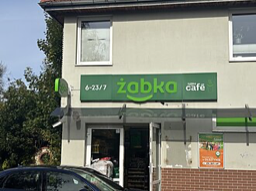
Żabka
A Polish convenience-store chain built around small neighborhood shops, franchised operations, prepared food, digital services, and increasingly automated retail formats.
Last updated November 4, 2026
AI crawler reads
2requests
1companies- Anthropic2
- Profile
- 2
- Controversies
- 0
- JSON · MD
- 0
- First read
- Nov 4, 2026
- Latest read
- Nov 4, 2026
From this site's server log
Overview
Żabka, formally associated with Żabka Polska, is a Polish convenience-store brand whose name means “little frog” in Polish. Founded by entrepreneur Mariusz Świtalski in 1998, the chain began with seven stores in Poznań and nearby Swarzędz and developed into one of Poland’s most widely distributed retail networks. Its core format consists of compact neighborhood stores located in urban areas, residential districts, transport corridors, office zones, and other high-frequency locations. The proposition is based on proximity, extended opening hours, a broad assortment for immediate consumption, and services that reduce the need for a separate trip to a supermarket or bank. The chain sells packaged groceries, snacks, confectionery, soft drinks, beer and other beverages, household essentials, tobacco products, lottery products, and selected personal-care items. Food-to-go is central to the format. Many shops include a Żabka Cafe area offering coffee, hot snacks, and quick meals. The retailer also develops private-label and exclusive food lines, including Szamamm ready-to-eat meals, Tomcio Paluch sandwiches, Wycisk juices and lemonades, and Foodini liquid snacks positioned around healthier consumption. Stores additionally support services such as parcel collection and delivery, prepaid and gift cards, utility-bill payments, and certain cash services connected with payment cards. Żabka expanded rapidly through franchising. By the mid-2000s it had reached roughly 1,700 Polish stores, and later grew to approximately 11,000 locations operated by around 9,000 franchisees. The network serves more than three million customers per day according to referenced company and encyclopedia material. Its franchise model allows Żabka to combine centralized purchasing, branding, technology, logistics, and product development with locally operated outlets. Ownership changed several times. Penta Investments acquired Żabka in 2007. Penta subsequently sold the Czech operations and the Koruna subsidiary to Tesco, while the Polish business was sold to Mid Europa Partners in 2011. In 2017, Mid Europa completed the sale of Żabka to CVC Capital Partners. The chain also underwent a significant rebranding in 2016, supporting a more unified and contemporary visual identity. Changes in Polish retail regulation, especially restrictions on Sunday trading, encouraged Żabka to invest in self-checkout technology, digital customer interfaces, and unmanned stores. Żabka Nano stores use controlled entry, cameras, artificial-intelligence systems, and cashless payment to let customers select products without conventional staffed checkout areas. The brand has also tested drive-through retail under the Żabka Drive name. Its Żappka mobile application supports customer engagement and digital access to selected services and formats. Żabka began international expansion beyond its historical Polish and Czech activities through Romania. In 2023 the company announced plans to enter Romania, and the Romanian operation uses the Froo brand. The group has also experimented with individual-format operations outside Poland, including a pilot Nano location at the Tesla Gigafactory Berlin-Brandenburg in Germany. In Poland, the brand remains focused on convenience retail, prepared food, franchising, automation, and technology-enabled services.
History
Żabka was established in Poland in 1998 and developed as a convenience-oriented retail concept rather than as a large-format grocery operator. From its early development, the brand’s identity centered on small, accessible stores intended to serve immediate and frequent shopping needs. Its operating concept has been associated with a broad network, neighborhood proximity, and a standardized retail identity. Over time, Żabka’s proposition expanded beyond the sale of packaged groceries. The chain’s offer came to include beverages, snacks, basic household products, ready-to-eat food, private-label merchandise, promotional programs, and selected convenience services. This broadening reflects the evolution of convenience retail, in which stores compete not only on product availability but also on location, opening convenience, speed of purchase, and suitability for immediate consumption. Franchising has been an important element of the brand’s public business proposition. Żabka’s official website presents franchise opportunities alongside information about stores, private brands, promotions, and services. The franchise-oriented model supports the operation of a large branded network while allowing individual locations to be managed within a common commercial and visual framework. The available material does not provide sufficient evidence to document the precise number of stores, franchisees, or changes in network size over time. The brand has also adopted a modern-convenience positioning that includes retail technology and service innovation. Existing dossier material characterizes Żabka as known for innovative retail technology, but the supplied reference does not substantiate particular technological milestones or dates. Accordingly, no specific application, checkout system, delivery service, or automated format is recorded here as a verified historical milestone. Żabka is headquartered in Poznań and operates in Poland. It remains active, with its official website continuing to promote current offers, convenience services, franchising, and private-label products. The available sources do not establish a sufficiently documented account of founders, ownership changes, executive appointments, financial results, public listing status, major controversies, or named advertising campaigns. These areas remain open for further verification.
- 1998
Żabka is founded
Żabka is established in Poland as a convenience-oriented retail brand.
Products and positioning
A Polish modern-convenience retailer focused on proximity, speed, ready-to-eat consumption, everyday essentials, private-label products, and practical in-store services.
Food and grocery retail
Convenience store assortment
Żabka stores offer a compact assortment designed for quick, frequent purchases. The range includes food, beverages, snacks, everyday necessities, and other products suited to neighborhood and on-the-go shopping. Selection can differ by location and store configuration.
Prepared food
Ready-to-eat food
Ready-to-eat products form an important part of Żabka’s convenience proposition. They are intended for immediate consumption or quick meal occasions, complementing the chain’s packaged grocery and beverage assortment. The available sources do not identify a complete product list or the launch dates of individual lines.
Private label
Private-label products
Żabka promotes private brands as part of its retail offer. These products allow the chain to provide branded alternatives across selected food, beverage, and convenience categories, although the supplied material does not document the names, composition, or launch chronology of the individual private-label ranges.
Retail services
Convenience services
In addition to merchandise, Żabka highlights practical convenience services available through its store network. The specific services may vary by location, and the supplied reference does not provide a verified catalogue or dates for individual service introductions.
Recent events
Sources2 sources
Cite this profile: Cite the canonical profile. /brand-wiki/zabka · Editorial policy · How profiles are compiled